
Three conversations. One common thread.
The Empowered Ecosystem allows you to look at your life and see what areas of your life are using the most of your time, energy, and resources.
It's part of my nature (and my job) to see trends. This is one that I can't ignore.
One leader was worried about the second round of layoffs coming. One manager afraid to ask for a promotion she'd been considering. Another, a high output individual contribtoe questioning whether they’re doing enough, even after exceeding every expectation.
3 different people. 3 different companies. The same emotion.
Anxiety
I’m not referring to the feeling that sends you home sick. I’m talking about the kind that quietly follows you from meeting to meeting. Consumes the quiet space in your day. The kind that has you checking email one more time before bed and the kind that convinces you everyone else has it figured out while you’re one mistake away from the chopping block.
We tend to blame work for this feeling. While sometimes that’s fair. I have another take I want you to seriously consider.
Here's the surprising observation... WORK often isn't the root cause. It’s usually the place where everything else shows up.
When your finances feel uncertain, you second-guess every career decision.
When your health is neglected, your energy disappears before lunch.
When your relationships are strained, it’s harder to lead with patience and confidence.
When you’ve lost sight of your purpose, every Monday feels heavier than the last.
That’s why I believe careers were never meant to be built in isolation. They’re built on an ecosystem.
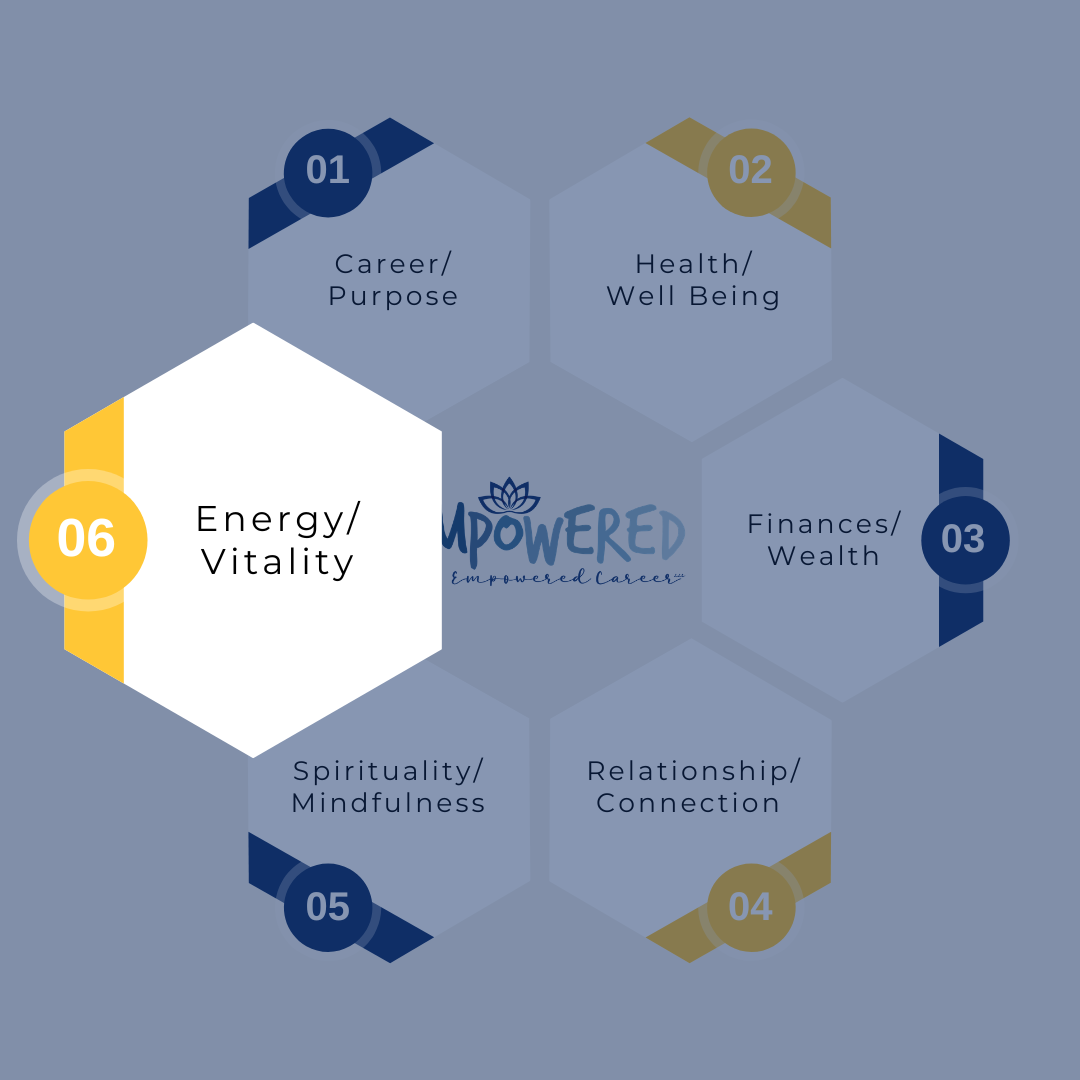
At My Empowered Career, we call them the EMPOWERED ECOSYSTEM:
Career. Do you know the value you bring, or are you waiting for someone else to define it?
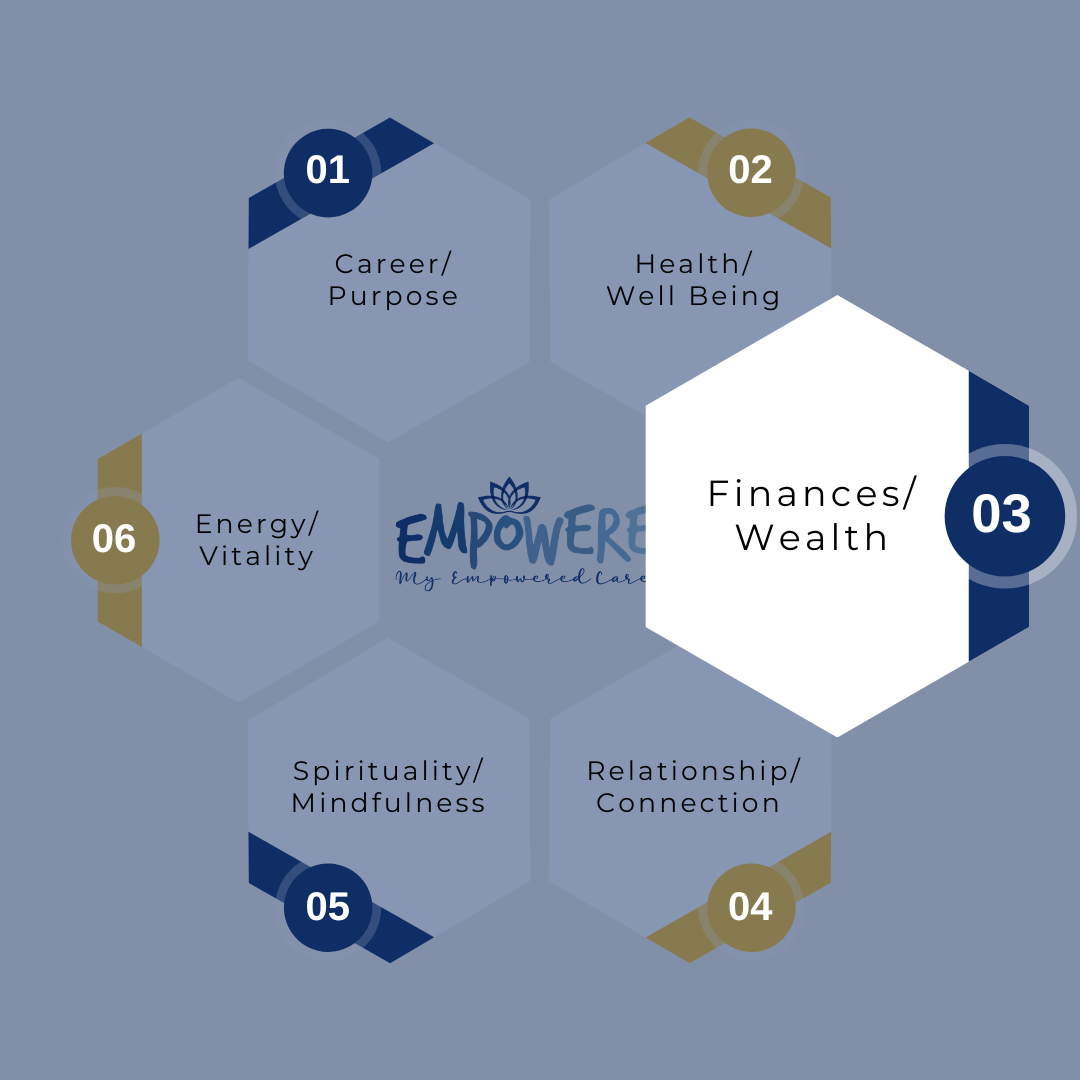
Finances. Are you making decisions from confidence or from fear?
Health. Is your body supporting the life you’re trying to build?
Energy. What drains you faster than it refuels you?
Relationships. Who challenges you, champions you, and tells you the truth?
Spirituality. What grounds you when uncertainty becomes the norm?
Tell me if this strikes a nerve with you.
You can download my FREE Empowered Ecosystem worksheet at the link below so you can see what areas of your life are using the most of your time, energy, resources and more: https://stephanie-freiboth.mykajabi.com/my-empowered-ecosystem-opt-in
When one pillar starts to crack, the others begin carrying more weight. Ignore it long enough, and anxiety doesn’t stay in one area of your life. It becomes your operating system. Your new normal…and not in a good way
The best news is that the opposite is true, too. Small improvements across each pillar create resilience that no promotion, paycheck, or title can provide.
So before you update your résumé…
Before you assume you need a new job…
Before you convince yourself you’re simply burned out…
Ask yourself one question: “which pillar needs my attention now?”
Not next quarter. Not when life slows down.
Today.
It's not realistic to think that you can eradicate anxiety and live a blissful life just because you're aware of your surroundings. The goal is to build a life that is strong enough to keep moving even when anxiety shows up.
That’s what being empowered has always meant.
Live Empowered,
Stephanie
Sometimes the hardest part of success isn’t working harder or changing who you are to please others, it’s making the right next decision. The Success Circle is where we share ideas and perspectives to help you think clearer, decide faster, and move forward with confidence. Use SUCCESS20 for a discount on your first month.
Oops I did it again...
Do you still say ‘yes’ when you’re at capacity?
I said yes when I should have said no. I set a realistic timeline and stressed about it. I multi-tasked my way through the day with two titles - Business Owner and Senior Snack Coordinator.
There was probably a moment this week when you almost said it too, "Sure, I can do that."
What was it for you? Another meeting squeezed into an already impossible calendar? Volunteering for one more project because no one else stepped up? Answering emails at 9:30 p.m. because you didn't want anyone to think you weren't committed?
I can't speak for you, but I want to do all the things so I maximize each day and say silly things like "I'll sleep when I'm dead". If you feel guilty when you step down or say no because it feels like a reflection of your performance and your value as human... I see you.
Burnout or the feeling of constant overwhelm and second guessing does't happy because of one big decision. It happens because of hundreds of tiny moments where we ignore what we already know.
We know we're at capacity.
We know our priorities are shifting.
We know we're exhausted.
And yet...we say yes anyway.
Somewhere along the way, many of us learned that saying no would make us look less capable, less committed, or less deserving of the opportunities we've worked so hard to earn.
I invite you to flip the script with me. Boundaries aren't selfish. They're a leadership skill.
The leaders who sustain high performance over years, not just seasons, aren't the ones who say yes to everything.
They're the ones who know what deserves a yes.
The rest gets a respectful no.
Think about the person in your office who was promoted and your first reaction was frustration because you worked harder, answered late night emails, and delivered more stuff.
I'm happy to hear from you if you totally disagree, but most of the time that person took time to build specific relationships and allies in the organization, showed what they were capable of upward ,and said no to specific tasks that were lower priority.
Now before you toilet paper my house and troll me, please know that I recognize that the work has to get done and not everyone can do just the high level relationship building and can say no to core functions of their job. All I am saying is instead of getting mad, look at the patterns and see what they did to see if you can swipe a play from their playbook.
Try the calendar audit:
Build 1 hour per week to look ahead 10-14 days. This will allow you to see the bigger picture of your schedule. You'll be able to assess work and personal to intentionally build in time for connection, energy protection, a workout or even 10 minutes of silence.
Zoom Out to Zoom In
Try the one recurring commitment challenge:
Choose just one recurring commitment and ask yourself:
If this were presented to me today, would I say yes?
Is this aligned with my priorities for this season?
Does this require me to regularly sacrifice my health, relationships, or peace to keep doing it?
Am I doing it because it matters or because it's become expected?
Sometimes the most freeing decision isn't adding something new.
It's releasing something you've quietly outgrown. This could be something tangible like what is on your calendar, or it could be something like a limiting belief or a habit you've ignored.
Crazy or true?
Live Empowered,
Stephanie
Sometimes the hardest part of success isn’t working harder or changing who you are to please others, it’s making the right next decision. The Success Circle is where we share ideas and perspectives to help you think clearer, decide faster, and move forward with confidence. Use SUCCESS20 for a discount on your first month.
Why your workday feels like a marathon- but it's not one you trained for
Lazy or Dysregulated?
It takes 23 minutes of your precious time to refocus each time you task switch. And most of the time you don't even have 23 minutes to recuperate before you switch again. (insert eye roll here)
It's 4:30pm. You've been "on" since 6:30am.
Getting everyone else up, fed, lunches made, hugs and kisses and out the door, then meetings, Slack pings, a pivot you didn't see coming, three "quick" requests that weren't quick at all. You were busy every single minute. But somehow your to-do list looks exactly the same as it did this morning.
Sound familiar?
You don't need another cup of coffee... hear me out.
Every time you switch tasks, your brain doesn't just pick up where it left off. Studies show it can take more than 23 minutes to fully refocus after an interruption. And the average professional switches contexts every 3-4 minutes.
You do the math.
This isn't a productivity problem. It's not even a discipline problem. It's what happens when no one ever told you that your focus was worth protecting.
You might actually love what you do. But lately it's hard to remember that because by the time you get to the work that actually matters, you're already running on empty.
That's what happens when your day owns you instead of the other way around.
It's not your fault; Nobody handed you a manual that said "protect your focus time." In fact, everything around you said the opposite. You've been told to be responsive, stay available, keep up, hustle. So you did. You said yes to the meeting that could've been an email. You answered the Slack message mid-thought. You were helpful, reliable, always on. And it cost you more than you realized.
No one is going to protect your time for you. That has to come from you. It starts with recognizing that every yes to an interruption is a no to your own best work.
So what actually changes things? Start smaller than you think. Before your day begins, identify the one or two tasks that require your full focus and creative problem-solving energy. Then block time for them like you would a meeting with your most important client.
There are polite ways to respond to someone else's request. Just because they asked now, doesn't mean you need to do it now. Tell them a realistic timeframe for when you can return their call or answer their question. (Super secret insider info: many times people figure it out on their own!)
Because that's exactly what it is.
When an interruption comes (and it will) you're not saying 'no' forever. You're saying "not right now." Which in my mind, is different than being difficult.
Turn your notifications off, use your ooo responder when you have meetings that are two hours our longer or dare I say put your phone in the other room for a bit so you're not distracted by the "research" you needed to do that ended in scrolling.
One protected hour a day changes more than you'd expect. Not because of the hour itself, but because of what it teaches you.
Psychology professor Anthony Sali calls this "task shifting" and shares more nuggets of wisdom about what happens when we do this along with insights on how we all handle it a bit differently.
Sometimes the hardest part of success isn’t working harder or changing who you are to please others, it’s making the right next decision. The Success Circle is where we share ideas and perspectives to help you think clearer, decide faster, and move forward with confidence. Use SUCCESS20 for a discount on your first month.
There's a reason you can do everything "right"- wake up early, block your calendar, say no to a few things-and still feel like you're running on fumes by noon.
It's not a time problem. It's an energy problem.
Harvard Business Review makes the case that managing your energy (not your hours) is what actually moves the needle. And once you read it, you won't think about your day the same way.
Live Empowered,
Stephanie
Why Procrastination Has Nothing to Do With Discipline
Lazy or Dysregulated?
There was a time I found myself doing something I almost never allow. For two days, I laid on the couch binge watching shows on Apple TV+. I had a to-do list a mile long and 97 reminders on my google to-do list that should have helped me stay on track.
Kids were at school. My husband was at work. My home office was steps away.
And yet I stayed on the couch.
My dog certainly didn’t mind. When I finally peeled myself off the sofa, she looked genuinely surprised, groaning slightly and giving me the unmistakable look that said, “Are you sure we can’t keep snuggling?”
But underneath the humor, something felt off. This wasn’t like me. So I took a walk around the block and asked myself an honest question:
What am I avoiding?
While the behavior lookd and felt like laziness, I knew something deeper was happening.
Research shows procrastination isn’t a time-management issue, it’s an emotional regulation problem. When a task triggers feelings like anxiety, self-doubt, or boredom, our brains prioritize short-term mood relief over long-term goals, leading us to delay the work even when we know it will make things worse later. Breaking the cycle IS NOT about more discipline! It IS about managing the emotions behind the task through self-compassion, curiosity, and small actions that get you started...
Sometimes the hardest part of success isn’t working harder or changing who you are to please others, it’s making the right next decision. The Success Circle is where we share ideas and perspectives to help you think clearer, decide faster, and move forward with confidence. Use SUCCESS20 for a discount on your first month.
Listen in as I talk with my friend Pam Flores, Attorney, about protecting your wealth through Wills and Trusts.
If you contact Pam, tell her Stephanie sent you. - Flores Law Group
Live Empowered,
Stephanie
Career Confused?
There was a time when career confusion and the infamous "mid-life crisis" was almost expected in your 40s.
You’d put in the years. You’d climbed a few rungs. You’d done what you were “supposed” to do.
Then, somewhere around midlife, the questions would start to surface: Is this it? Is this how I want to spend the next 20 years?
What’s changed is not the crisis itself, rather it’s the timing.
I’m seeing more people wrestle with these questions in their late 20s, early 30s, and mid-30s. Not quietly. Not hypothetically. But in very real, very disruptive ways.
They, like you, don't lack ambition or resilience. In fact, you work your butt off.
It’s because the world of work, life, resources, priorities, world events and so much more looks nothing like it did even a decade ago.
The Old Career Model Assumed a Simpler Life
The traditional career path was built for a time when:
Work stayed mostly at work
Careers progressed linearly
Life responsibilities stacked later, not sooner
Today, that model collapses under real life. I remember paying more than 1/2 of my sallary in a year for childcare...REAL LIFE.
Do any of these resonate with you? You're building careers while managing student debt, caregiving, parenting, health challenges, financial pressure, and constant digital noise. The expectations at work have grown, but the space to recover, reflect, and recalibrate has shrunk.
So when you say, “I don’t know if I want this anymore,” what you're often really saying is: “This no longer fits who I am or the life I’m actually living.”
Can I get a commitment from you?
One of the most damaging narratives I see is the idea that questioning your career early means you didn’t think things through or you’re giving up too soon.
In reality, many people did think things through based on who they were at the time.
But people evolve. Values shift. Priorities reorder themselves. What once felt energizing can become draining when your life context changes.
That tension is hard but necessary.
Okay...now here's the commitment.
When discomfort shows up, the instinct is to move fast.
New job. New title. New company. New path.
Action feels productive, but without clarity, it’s easy to recreate the same dissatisfaction in a different environment. The role changes, but the underlying misalignment doesn’t.
A career crisis isn’t always asking for a dramatic pivot. Sometimes it’s asking for a deeper understanding of what’s driving the unrest in the first place.
Here's your invitation.
Before asking, “What job should I get next?”, a more useful question is “What has changed about me?”
Noticing misalignment earlier gives you more options, not fewer. It allows for adjustment instead of burnout, intentional shifts instead of reactive ones.
Live Empowered,
Stephanie